Saturday, April 26, 2025

Let Us Build a Tower: A Readthrough Review

A tower covered in cranes and scaffolding reaches up into the heavens. Above it the text: "Let Us Build A Tower"

The following is a review of the game Let Us Build a Tower by Caleb Wimble. I was provided a copy of the game to review but received no other compensation.

Let Us Build a Tower (LUBAT) by Caleb Wimble is a game that strikes me as an excellent encapsulation of the current state of OSR playstyle. Whether this is a positive or a negative for you will depend largely on your existing feelings about said movement and the many-headed hydra it has become. While reading through this book, I personally found the answers to questions I have had about OSR-style games for years, and for that I will remain eternally grateful.

To start, let's get back to the basics. Let Us Build a Tower: A Mythic Bronze Age Adventure in Babel crowdfunded on Kickstarter in November/December 2023, raising $20,699 from 414 backers on the promise of "an epic megadungeon-building ascent to Heaven full of wonders and hellish dangers through ever-stranger floors." The game as it stands now, ~1.5 years after the campaign's end, is 140 pages that contain all the rules you need to run four different classes of Throne-Seekers through 1,296 possible combinations of rooms and events, an extensive bestiary, and a smattering of details about other cities in the desert sands around Babel. The campaign also funded the Tower Builder App, a product now freely available that generates floors of the ruined Tower of Babel complete with rooms and events.

 So what does this all amount to? Well as I read through this book about endless adventure in a crumbling cursed structure of Biblical proportions, I was reminded of nothing so much as one of my all-time favorite games The Binding of Isaac. For though LUBAT's primary game influence is credited to The Gardens of Ynn (which makes sense, the former draws extensively on the depthcrawl mechanics introduced by the latter), this newer iteration has much more in common with the roguelike genre of videogames given the way that the Tower of Babel resets itself every time your Throne-Seekers leave its walls and the overall easy manner with which player characters might meet their end. This combined with extensive religious subject matter and randomly generated twisting maps full of strange rooms made for an obvious connection to a game that I have spent over 41 days of my life playing.

The Steam banner image of "The Binding of Isaac: Rebirth" showing 991.9 hours of playtime

And it was this connection to Binding of Isaac that sparked a sort of divine revelation to me about the nature of this game. For you see, as I was reading through the rooms and events and monsters you might encounter while playing, I couldn't help but ask myself..."So?" They all seemed very gameable and fun to encounter, but they weren't quite adding up to something that felt like a very compelling roleplaying game. All you're doing is going from one room to the next, dealing with or fighting creatures you find there, and collecting treasure.

Much like you do in Binding of Isaac.

The game I've played 41 consecutive days in total.

A close-up on the 991.9 hours of playtime
Send help

So clearly I'm not opposed to spending significant amounts of time running through procedurally generated levels. But what has compelled me to play so much of one game but balk at the same in another? Well in BOI, I'm pushed forward by a sense of mastery and mystery. M(a/y)stery if you will (and I will not). Different characters have different powers, there are literally thousands of active and passive items to encounter that can be used in different ways, and there remain several hundred achievements I have yet to unlock. The impulse for mastery is satisfied whenever I manage to complete a run or unlock a difficult achievement, and the impulse for mystery is sated each time I enter a new room and find out what awaits me on the other side (usually an adorably disgusting monster to kill). LUBAT surely has the mystery with the depthcrawl mechanics slowly ratcheting up the strangeness of the rooms and encounters, but the book itself seemed to be missing the mastery. Yes, you can level up your Throne-Seeker with a nicely modular system that gives a surprising amount of customization to the small roster of classes, but that just doesn't hit the spot in the same way that navigating the bullet hell of BOI does.

Now you might notice that I specifically said "the book itself" is missing the mastery, and that is the nature of my personal aha moment (which has been extensively documented in OSR blogs, so this is not an original idea by any means): mastery in LUBAT comes from internal motivation rather than player skill. Why is your Throne-Seeker, specifically, exploring the ruined Tower of Babel? Well there's the obvious: it's there, it's full of treasure, and there's supposed to be a literal stairway to heaven somewhere inside. But what might you want any of that for? What does the treasure do for you? What would you do with the power of a god if you managed to actually enter heaven? The answers to those questions are where *gasp* roleplaying enters the picture, and truly what separates LUBAT from BOI. Throne-Seekers must deeply and sincerely want something to be willing to risk death and divine transformation to get it.

To the game's credit, the "Mythic Shinar" section offers information about a wide variety of cities near Babel and the petty warlords/ambitious sorcerers that fill them, but this section is also the most confusing addition to the game. (It was, appropriately, a stretch goal for the Kickstarter and not presumably part of the original vision.) It expands the focus of the adventure beyond Babel, but most of the game's text is about Babel: its rooms, events, monsters, treasure. Expanding the world beyond it provides some helpful context to imagine the reasons a Throne-Seeker would enter the cursed tower, but it also dilutes the focus of the adventure. The Gardens of Ynn and The Stygian Library, the primary predecessors for LUBAT, don't really bother with explanations for why you might enter them; they're either just there for the exploring, or else they're making it difficult for you to escape them. I don't really prefer this style of adventure, but I must admit that it gives them a certain purity of purpose. You either engage with their puzzle boxes as they are, or you don't.

Here at the end of the review, it might seem silly to say that the main thing I took away from LUBAT is "characters need a motivation," but it was a genuinely important revelation for me. In games like D&D, my impulse to play comes from the story, sure, but also from the mechanical progression. There are spells to pick, cool abilities to play with, and ever stronger monsters to test my character against. Storygames tend to provide upfront story beats and motivations to pursue, and while perhaps a little lighter on the "mastery" side of things, the broad roadmap given means that I have guidelines within which I can explore while still being confident that I'll end up somewhere meaningful. OSR games (for me) fall into something of an uncanny valley between these two: not enough mechanical levers to look forward to pulling and little to no story roadmaps to follow. I still don't think that OSR games will ever be my favorite to play, but I now realize that I was approaching them too passively. I was used to games that bring more to the table and can carry me along with them a bit more, but in LUBAT you'd better be ready to help build that Tower of Babel yourself or it might just crumble out beneath you.


Some final itinerant thoughts about LUBAT that don't really fit anywhere else in this review:

  • The bestiary is truly fantastic. The Fallen Ones, Great Serpents, and Legendary Revenants in particular are really dynamic antagonists/patrons/monsters to encounter. Provide information about these early and often to your players, it will help motivate them to keep climbing the tower (I know that it would motivate me!).
Black and white illustration of a bipedal humanoid with taloned bird feet, a lion's tail, hands with long nails/claws, and an elongated face with a mouth full of long sharp teeth
Who wouldn't want to meet LILÎTU in the Tower of Babel?
  • I deeply respect the amount of research that clearly went into this game, and I find the combination of Old Testament and Sumerian mythology really compelling. It's just familiar enough to have something to grab onto, just strange enough to be surprised.
  • Love love LOVE the spellcasting system: carry around a bunch of Babel Stones that each have one word on them, and combine those words into brief descriptors that govern what a spell can do. It's a system that will likely require some practice to get the hang of, what with negotiation around the power level desired by a spellcaster, but one that can make for highly creative results.

Friday, April 11, 2025

On Con Games and the Apocalypse (World)

 This past weekend I did a very silly thing that has become part of a pattern for me: running games for the first time at a convention for strangers.

On the three occasions I have attended a con thus far in my life, I have always run games, and of those games there is always at least one that I have not played previously. I consider myself a pretty good GM and thus see cons as an opportunity for me to try out some new stuff in a one-shot environment. This time around I was bringing Apocalypse World and The Warren to the table, games that I had been very excited by upon reading them for the first time within the past few years but had yet to actually play. Surely, I figured, being familiar with PBTA games in general would allow me to make one-shots for them without too much trouble.

I was wrong.

Okay that's overdramatic; the games were fine and the players said they had a good time, but I definitely struggled a bit more than I expected to with Apocalypse World in particular. There would be times when I'd grasp in vain for an appropriate move to resolve what a player had just described or struggle to figure out how moves might cascade into each other appropriately and thereby keep the action churning along. Nothing went off the rails, but sometimes it felt like the wheels were spinning without catching much traction.

At the time I was confused: I had familiarized myself with the moves, created some pre-gen characters so that we could get started playing right away (and so that I would be familiar with the moves present at the table), and created a setting with conflicts ready to boil over the moment action started. So what went wrong?

Well as I've been thinking about it since then, I've realized two important things:

  1. I wasn't always making the best use of AW's arenas of conflict in my games.
  2. I'm not 100% convinced that AW makes for the best convention games.
Let's break these ideas down.

Working with Arenas of Conflict

In the linked article above, Vincent Baker lays out the 8 arenas of conflict he sees in Apocalypse World: honest negotiation, commitments & obligations, negotiation in bad faith, implicit threat of violence, explicit threat of violence, outbreak of violence, nonviolent physical striving, and weirdness. These are all places where characters (PCs and NPCs alike) can come into conflict with each other over their differing goals and motives. Additionally, all of these arenas have Basic Moves associated with them, allowing for players to take a variety of approaches when trying to accomplish things and gently encouraging players with certain stats to focus primarily on particular arenas (someone with a high Hard stat is going to be most mechanically effective when in the "Explicit threat of violence" and "Outbreak of violence" arenas, for example).

Now it's worth saying that these are descriptive and not prescriptive; the arenas are not laid out in the rules nor are the associations between them and the Basic Moves. But it all makes general sense: you can't really say that you're negotiating with someone if you're trying to seize something from them by force. The mob might be able to say that, but the reality is still that they're taking something, not asking for it.

But even with that said, even with no one telling you that these are the arenas of conflict available to you or that certain moves are associated with said arenas, something is missing from the game if you don't make full use of these arenas, something both narrative and mechanical. Narratively, you're not getting a full scope of what the world you're playing in can offer, while mechanically you're missing out on some of the cool stuff that your characters can do.

In one of my games, for example, a military strike force came to claim ownership of a derelict oil platform where a community of people live. By the end of the game there had been threats of violence, outbreaks of violence, and even some negotiation, leading to a lot of going aggro and reading a person/situation, but not so much seducing/manipulating someone or opening your brain to the world's psychic maelstrom. The game just felt a little incomplete to me, the person running it and most clued into all the moving parts.

Apocalypse World Con Games? Prep Wisely

The real central lack of my two games, I now realize, was the absence of Commitments & Obligations. My players were very happy to slot themselves into my world and make up some history with each other, but without more explicit ties from my world to them it was a little too easy for them to all team up and work together.

In most games this would be a great thing! No one likes the player in the D&D party who's an edgy lone wolf and doesn't want to work with anyone else, but for Apocalypse World you really want some conflicting loyalties among the players. They don't need to actually come into direct conflict, but it really helps if they have to renege on some other agreements in the world in order to work well with the other players. That way, the decision to work with the other PCs cascades into new NPCs showing up and getting involved in the action, and the decision to work against the PCs creates more action between the people at the table.

AW is a game that expects and encourages conflict between player characters because it creates interesting, dynamic stories, and I'm honestly not sure if people in a convention setting are necessarily always ready for that. (Not the interesting dynamic stories part, the PC conflict part.) Trad play cultures (especially D&D) are full of horror stories of player conflict gone wrong, tearing apart tables and ending friendships, and people looking to try out some fun games at a convention might just be averse to getting anywhere near that kind of play.

I can say for sure that at my tables players were always trying to get along and work together, which is great! But it's not really what Apocalypse World is bringing to the table. Had I known better, I would have prompted the players to explore that kind of conflict and to make sure that we were all on the same page for what to expect. And if they weren't interested in that (which is completely fair), I would have needed some strong backup NPCs to barge into situations and start fucking everything up.

Tuesday, April 1, 2025

March 2025 TTRPG Crowdfunding Retrospective

Mashup of Backerkit, Crowdfundr, and Kickstarter logos reading: BACKfundER

Turns out my version of an April Fool is to immediately write a monthly retrospective! Zine Month/Zine Quest are essentially done, so it's time to read the tea leaves and see what we can divine about the future. And folks? It's a mixed (tea) bag.

  • 294 campaigns
    • 34 Backerkit
    • 6 Crowdfundr
    • 254 Kickstarter
  • $4,205,543.02 raised
    • $1,918,365.98 on Backerkit
    • $6,182.91 on Crowdfundr
    • $2,280,994.13 on Kickstarter
  • Types of campaigns
    • 15 accessories
    • 1 actual play
    • 65 adventures
    • 4 advice
    • 1 audiobook
    • 18 campaign settings
    • 1 fundraising
    • 2 reprints
    • 73 supplements
    • 111 systems
    • 3 zines
  • 150 distinct systems used (84 original)
    • 73 campaigns (24.83%) used D&D 5E and raised $815,507.09 (19.39% of all money raised in March)
  • 47 campaigns used AI in some form (15.99% of total) and raised $317,417.28 (7.55% of all money raised in March)
    • 21 of these were D&D 5E campaigns, accounting for 28.77% of all 5E crowdfunding campaigns
  • Campaigns were based in 22 different countries
    • Top 3: 161 in USA, 46 in UK, 19 in and Canada
    • Singleton countries: Denmark, Ireland, Mexico, New Zealand, Panama, Portugal, Singapore, Vietnam

Backerkit's March

The top 5 campaigns on Backerkit in March were:
  1. The Magnus Archives RPG: Tangled in the Web by Monte Cook Games ($1,015,475 from 6,174 backers)
  2. Terraforming Mars - the official TTRPG by Shadowlands Games ($376,758.63 from 1,800 backers)
  3. Adventures in the Household: Journey to the Garden 5E by Two Little Mice ($131,216.21 from 985 backers)
  4. Festival of the Forgotten: A Dark Carnival D&D 2024 Handbook by Storytellers Forge Studios ($85,337 from 730 backers)
  5. Hexploration Decks & Tiles-- Hexcrawl/Sandbox RPG Support by Inkwell Ideas ($62,991 from 773 backers)
You'll permit me some editorializing here (as it is my blog after all): I still kind of can't believe that a Terraforming Mars TTRPG exists (or will exist). I love the game, but it's very difficult for me to imagine how exactly it connects to an adaptation in a meaningful way. That said, when I read the Quickstart I was pleasantly surprised at a lot of the ideas it contains. There's an ideal of playing through the various phases of Mars' terraforming, with player characters being related to the ones used in previous phases but changed somehow (the example given, I believe, was employees of one of the vast terraforming corps in one phase and rebels against the same now-dominant corp in the next).

That said, plenty of those ideas are also deeply confusing and contradictory in their current form. Case in point: a significant portion of the quickstart devoted to combat. Not necessarily my primary concern in a game about scientific mastery over an uninhabited alien landscape while grappling with corporate control of said landscape! (Of course I understand that violence is going to be an intrinsic part of the corporate control in question, but does that really need detailed combat maneuvers and tables full of weapons? I'd say no.)

If there was ever any doubt, official TTRPG adaptations are here to stay (as evidenced by the massive success of the first Magnus Archives TTRPG supplement). I'm just glad that they also are bringing with them some interesting ideas.

Crowdfundr's March

There were 6 campaigns on Crowdfundr in March, which were:
  1. Load the Simulation: Train hard. Hold together. Drift alone. by Cezar Capacle ($1,651 from 133 backers)
  2. The Great Thaw of Gryzmithrak Spire-A Draw Steel Adventure by Andie Margolskee ($1,149 from 151 backers)
  3. Pirouette - A Ballet Horror TTRPG by InnocentGoblin TTRPGs by Michael Sweeney ($1,071.91 from 52 backers)
  4. Anomaly Hunters, a TTRPG of monster hunting and TV by Wendigo Workshop ($866 from 34 backers)
  5. Letters to a Young GM by John Wick ($790 from 54 backers)
  6. This Town Is Full Of Monsters by Aleks Samoylov ($655 from 11 backers)

There remains not much to say about Crowdfundr.

Kickstarter's March

The top 5 campaigns on Kickstarter in March were:
  1. Fighting Fantasy - Solo Adventure Gamebooks - Back In Print! by Steve Jackson Games ($319,101 from 5,331 backers)
  2. Gods of the Forbidden North Trilogy by Pulp Hummock Press ($168,704 from 1,660 backers)
  3. The Lady Pirates Tarot & Sails of Fate 5e Supplement by Baroque Publishing ($108,949 from 1,209 backers)
  4. Immortals: Hubris & Glory (5E) by Black Lantern Productions ($98,722.20 from 821 backers)
  5. Mappa Mundi - An Exploration + Ecology RPG by Three Sails Studios ($97,610 from 1,849 backers)

I want to talk briefly about Gods of the Forbidden North Trilogy as the first $100,000+ campaign in a while to use AI in any way. It was used here to make the promo video (commissioned by the author using his own money, he is careful to stress) and nowhere else in the product. And I have no reason not to believe that.

HOWEVER!

The trailer still looks like ass lol.

The "Use of AI" section on Kickstarter says "the creative filmmakers at Big River Film Co. who shot the marketing video at the top of this Kickstarter page did experiment with AI elements to explore what they, as real artists, could accomplish by pushing boundaries with such technologies." Now the word 'shot' is doing a lot of work here, because when watching the 1 minute and 14 second video I don't think there was a single frame that didn't seem AI-generated.

And again - it looks like ass.

What experiment are they doing here exactly? What boundaries are they pushing? It just boggles the mind that someone with the budget to commission a video like this couldn't...commission a better one.

Pay attention, too, to the primary justification that comes at the end: "this project’s promotional video is a strong example of how AI can be a powerful tool in leveraging the playing field between small, independent creators and large corporate entities with staggering budgets." No it isn't! This video looks cheap! It consumed god only knows how much energy and water, and it shit out this 74 second turd of a video and a metric ton of carbon emissions. It's the equivalent of "I went to ______ and all I got was this crappy t-shirt" except if the t-shirt was also actively killing the person wearing it and everyone around them (or more accurately, if it were actively killing a bunch of people in the Global South who are already bearing the brunt of climate change).

I'm fucking sick of it. Creators need to do better, and the 1,660 people who backed that campaign need to care about more than their silly little roleplaying game that's probably going to sit on their shelf unplayed.

March 2024 vs. 2025

  • Number of campaigns
    • Backerkit: 21 (2024) - 34 (2025)
    • Kickstarter: 232 (2024) - 254 (2025)
  • Money
    • Backerkit: $939,594.09 (2024) - $1,918,365.98 (2025)
    • Kickstarter: $4,897,291.24 (2024) - $2,283,379.13 (2025)
  • AI
    • Count: 34 (2024) - 47 (2025)
    • Money: $152,318.82 (2024) - $319,802.28 (2025)
  • D&D 5E
    • Count: 69 (2024) - 73 (2025)
    • Money: $1,918,554.37 (2024) - $815,507.09 (2025)
Something is going on with crowdfunding right now, and I have absolutely no idea what. $1,635,141.22 - that's how much more money was made in March 2024 over March 2025. Kickstarter campaigns raised over $2.5M LESS this year despite increasing the number of campaigns that successfully funded. The top is weirdly falling out (falling off?) of Kickstarter TTRPG campaigns, as evidenced by:
  • Kickstarter March average: $21,109.01 (2024) - $8,989.68 (2025)
  • Kickstarter March median: $2,956.05 (2024) - $2,320.09 (2025)
  • Kickstarter March D&D average: $28,399.15 (2024) - $8,801.27 (2025)
  • Kickstarter March D&D median: $2,556.05 (2024) - $2,206.73 (2025)
Some of this can be explained by high profile, company-backed campaigns moving to Backerkit, but even that doesn't explain it all. There were 10 campaigns in March 2024 that raised $100,000+ as opposed to 6 in March 2025, and that shortfall accounts for almost the entire discrepancy between these two years (assuming that the average high-value Kickstarter money raised across both years [~$367,000] is representative, the absence of 4 of those represents a reduction in $1.468M).

What does this all mean? Well as always, in the absence of year-over-year data and perfect macroeconomic oracular knowledge, it's impossible to say. But given what we do know: I'd say this is a sign that some people are already waiting to see what's going to happen with the US economy and an impending trade war. But it's not the relatively big publishers, because your Steve Jacksons and Monte Cooks ran big campaigns in March that are undoubtedly going to be affected by tariffs and paper costs. Instead, it's the ambitious third-party D&D people who are kind of vanishing. And this makes sense! If you're a small team preparing a big tome of a book that you anticipate a big audience of D&D enthusiasts will snap up, I'd be concerned about the potential success too. Will your small team be able to handle the chaos of a fascist hopeful-dictator as you try to deliver products? Will people balk at paying unexpectedly high costs for shipping and allow tomes to pile up in your house or a rented warehouse? Will tariffs suddenly change right before a shipment arrives internationally and completely wipe out most of the profit you made? It's stressing me out just thinking about it, and I've never had to even try to do it before.

So yeah (*chuckles weakly, as though trying to put a brave face in spite of a mortal wound*) April Fools...what a fun holiday. Can't wait to see what happens this month...

Monday, March 10, 2025

February TTRPG Crowdfunding Retrospective


Mashup of Backerkit, Crowdfundr, and Kickstarter logos reading: BACKfundER

Zine Month/Quest are receding into the rearview, though there are still plenty of crowdfunding campaigns still wrapping up that are part of those events. So let's see how they impacted February's numbers, shall we? As always, check out the raw data here.

  • 223 campaigns
    • 19 Backerkit
    • 2 Crowdfundr
    • 202 Kickstarter
  • $4,132,821.22 raised
    • $1,194,103.59 on Backerkit
    • $1,951.66 on Crowdfundr
    • $2,936,765.97 on Kickstarter
  • Types of campaigns
    • 9 accessories
    • 55 adventures
    • 1 advice
    • 1 app
    • 2 audiobooks
    • 6 campaign settings
    • 1 fundraising
    • 63 supplements
    • 84 systems
    • 1 zine
  • 110 distinct systems used (59 original)
    • 58 campaigns (26.01%) used D&D 5E and raised $1,773,005.23 (42.90% of all money raised in February)
  • 39 campaigns used AI in some form (17.49% of total) and raised $197,675.97 (4.78% of all money raised in February)
    • 28 of these were D&D 5E campaigns, accounting for 48.28% of all 5E crowdfunding campaigns
And for something new: country statistics!
  • Campaigns were based in 21 different countries in February
    • Top 3: 111 in USA, 34 in UK, 12 in Australia and Canada
    • Singleton countries: Austria, Belgium, Denmark, Japan, Switzerland, Vietnam

Backerkit's February

The top 5 campaigns on Backerkit in February were:
  1. Legend of Kain Official Encyclopedia and Tabletop Role-Playing Game by Lost In Cult ($752,960.51 from 4,853 backers)
  2. Terror from the Underdeep: A Giant Box of 5E Adventure by Goodman Games ($255,047 from 1,626 backers)
  3. Level Up: A5E Gate Pass Gazette Annual 2024 by EN Publishing ($39,932.77 from 641 backers)
  4. Broadsword Guide to Hunting Werebeasts by DMDave Publishing ($30,303 from 396 backers)
  5. Starships & Soldiers - A Mothership Sci-Fi RPG Toolkit by Hammer City Games ($20,532.06 from 695 backers)
February is an odd month for Backerkit's top campaigns in that they're a little heavier on the D&D 5E offerings than usual. My working theory is that when there is a flood of weird shit (or at least unfamiliar shit, as evidenced by the 59 original systems funded this month), the average crowdfunding backer tends to coalesce around the things they do recognize. For Backerkit, that's a couple of 5E campaigns, a MÖRK BORG-based game for an existing IP (Legend of Kain), and a Mothership supplement (which I believe was originally intended to be part of Mothership month last November).

Crowdfundr's February

I genuinely almost forgot to put in these data since there are campaigns on Crowdfundr so infrequently. In February there were 2:
  1. Rol de Guerrilla Vol.1 - Media Docena de Rol by ¡Rol o Barbarie! ($1,337.66 from 132 backers)
  2. Secrets in the Static: Lynchian Horror TTRPG by Thought Punks ($614 from 34 backers)

Kickstarter's February

The top 5 campaigns on Kickstarter in February were:
  1. A Time Traveler's Guide to Dinosaur Hunting by Darryl Jones ($449,998 from 3,247 backers)
  2. KULT: Divinity Lost - Dark Realms and Other Horrors by Helmgast ($394,922 from 2,164 backers)
  3. Monster Vault 2: Deadly Creatures for 5E D&D and TOV by Kobold Press ($261,864 from 3,749 backers)
  4. The Oracle RPG App - Less Prep. More Play. by Nord Games ($257,090 from 1,222 backers)
  5. Glumdark by Exalted Funeral ($149,439 from 2,719 backers)
Kickstarter's February is very similar to Backerkit's: top campaigns are dominated by recognizable systems (5E) and/or people (Kobold Press, Exalted Funeral).

February 2024 vs 2025

So how does February compare between this year and last year? If you'll recall from last month, Kickstarter money was way down and Backerkit's technically was too (but only if you include the MCDM RPG, which is practically the definition of an outlier). Well this time around we're seeing more of a return to form:
  • Number of campaigns
    • Backerkit: 12 (2024) - 19 (2025)
    • Kickstarter: 214 (2024) - 202 (2025)
  • Money
    • Backerkit: $884,266.93 (2024) - $1,194,103.59 (2025)
    • Kickstarter: $2,468,976.14 (2024) - $2,936,765.97 (2025)
  • AI
    • Count: 35 (2024) - 39 (2025)
    • Money: $236,973.58 (2024) - $197,675.97 (2025)
  • D&D 5E
    • Count: 57 (2024) - 58 (2025)
    • Money: $592,773.60 (2024) - $1,773,005.23 (2025)
These data actually poke some significant holes in my "people like familiar things" narrative given that money raised by D&D 5E campaigns more than doubles from year to year. If my half-baked idea were accurate, we wouldn't necessarily expect to see such a jump since the conditions are more or less the same between the two years (in terms of number of campaigns and unfamiliar systems).

Some of this is explained by an increase in 5E campaigns on Backerkit (2 campaigns raising $2,535 in 2024 vs 5 campaigns raising $333,080.42 in 2025), but something similar can be seen on Kickstarter (55 campaigns raising $590,238.60 in 2024 vs 53 campaigns raising $1,439,924.81 in 2025).

To wildly speculate about a different dynamic that could be at play here, I wonder if economic uncertainty and a generally pessimistic feeling about the economy (at least here in the US) could drive people to familiar, comfortable pastimes as well. D&D 5E as a familiar touchstone could give people faith in a fairly high floor of enjoyment and therefore a solid return on 'investment' so to speak, whereas original or unfamiliar systems present more of an unknown to the average TTRPG enjoyer and therefore a riskier place to spend their money.

Keep in mind that this is the most armchair of psychology, and proving this would take a hobby-wide level of surveying that would likely produce inconclusive results given that people are generally bad at self-reporting data on themselves.

Still image from Blue's Clues: Steve (a white man with short-ish brown hair, wearing a striped green shirt and beige pants) sits in a red armchair. Blue, a cartoon dog with light blue fur with dark blue spots, pokes out from behind the chair. Steve holds a notepad and pencil in his hands, and above his head are black and white drawings of a pig, some bricks, and a wolf.
Me rn

Lord knows I wouldn't be able to give particularly consistent reasons why I back the campaigns I do, even when I think ones I don't back sound interesting too.

Well that's it for February! See you back here in a month to break down the remaining Zine Month/Quest campaigns (and then some).

Monday, February 10, 2025

Gaming With Death


Black and white still from The Seventh Seal (1957) where Death (a white man dressed all in black) plays chess with a slightly older white man dressed in what looks like chainmail

Warning: spoilers for Spiritfarer (2020, Thunder Lotus Games) and Citizen Sleeper 2: Starward Vector (2025, Jump Over the Age).

In late 2021 and early 2022, I had a mild breakdown. It began a few days before I was scheduled to fly home with the unwelcome news that COVID cases were spiking again despite vaccinations. The spike in cases was not particularly new by this point in the pandemic (I had canceled a flight home in 2020 because it didn't feel safe for me personally or responsible in a public health context to do so), but I think that I had perhaps subconsciously hoped that the vaccination rollout would have changed something, anything, about the new reality we continue to find ourselves in.

My brain began spinning up the anxiety loom, weaving intricate tapestries of terrible futures that could befall me: I could catch COVID on the metro to the airport and die, I could catch COVID on the plane and die, I could catch COVID and bring it back to my family and we could all die. The focal point that this doom spiraled around was my clearly imminent death, followed by the simple question:

What will it feel like to die?

I was intensely stuck on this point. I had no frame of reference for what oblivion would feel like because it inherently can't feel like anything. Even the idea of drifting in an endless dark void presupposes that you will still exist to experience the crushing emptiness. It perhaps goes without saying that, though I wouldn't call myself an atheist, I have no strong faith in any particular afterlife. Even reincarnation, which at least entails the further existence of my abstract self, will necessitate the end of the specific entity that is my current subjective existence. The examination, consideration, and abandonment of each potentially comforting afterlife possibility occupied all my waking hours (which were ever so conveniently extended by semi-regular panic attacks that kept me awake far longer than I wanted to be).

Until I was able to start escitalopram (great value Lexapro for those not in the know) about a month into 2022, the miasma of this obsession hung over me, choking out much the light and keeping new life from growing. Even now, three years on, I sometimes feel the old specter loom and know that it is something that I will be battling for the rest of my life. The old me, ironically, is dead. Let us instead turn to the new one that struggles to be born.

Two games that have helped me process this are Spiritfarer, a 2020 cozy lifestyle sim from Thunder Lotus Games where you play the titular spiritfarer helping departed souls on their way to an afterlife, and Citizen Sleeper 2: Starward Vector, the 2025 sequel from Jump Over the Age where you play a sleeper (an emulated human mind put in a robot body to work for the Essen-Arp corporation) on the run from your benefactor-turned-tyrant Laine.

Though vastly different in setting (dreamlike afterlife ocean vs scattered settlements in an asteroid belt) and tone (cozy chores vs cyberpunk dystopia), the games are shockingly similar in many ways. Take the main characters: amnesiac individuals who accumulate a varied cast of characters as they figure out what they want out of their second lease on (after)life. Or world structure: a slowly expanding map of settlements you visit many times as you run missions for both yourself and your shipmates. Or ending: the death of your character, at a time more or less of the player's choosing, that gives them a chance to move on to something new.

It is less the ending of these games that has helped me process my feelings about dying and more how they both help you get there. Both games have a sort of bell curve experience: an  introduction to the world that's pretty linear and introduces fundamental mechanics, a quite open middle that allows you to explore the world on your own terms (assisted by quests that point you to various points of interest), and a slow whittling down of gameplay until there's not much left to do but move on.

In Spiritfarer, this comes as you complete your shipmates' quests and bring them to the gate where they can move past this afterlife ocean to whatever is next. You build up the boat that you travel on over the game, adding livestock and agriculture modules as well as homes for your guests until you have a truly massive edifice that practically rivals any of the towns you can visit in the game, but when your last companion moves on you're left with an empty boat that feels all the emptier from the buildings you added to it. Similarly, the map that was so exciting at the beginning of the game with the unexplored spaces on it so full of potential is now all filled in, nothing left to discover. And this is good! This is how it should be. The whole game is about you helping these whimsical and troubled spirits make peace with their lives and themselves so that they can move on, and secretly the game has been walking you along the same path. Of course you could keep playing, keep fishing and growing flax and catching falling stars and traveling the same well-sailed sea routes...but don't you want to rest? Don't you want to try something new? And what could be more new than the place beyond this, the place where all of your friends have already gone? You've accomplished what you needed to here. Isn't that enough?

Citizen Sleeper 2, on the other hand, builds up to a grand confrontation with Laine on Darkside, the space station where his gang reigns supreme. His influence has been growing in you (literally) ever since he stopped your reboot at the beginning of the game, kicking off the whole chain of events that led to this moment, and this is the time where you can finally free yourself from him. And you do...but that's not the end. See, you were being rebooted to break your artificial body's dependence on stabilizer, a futuristic cocktail that counteracts the planned obsolescence Essen-Arp built into sleepers, and the incomplete reboot is starting to take its toll. You accumulate more permanent glitches, a game mechanic that expresses the fundamental decay your body is experiencing, and your companions warn you that if you don't complete the reboot you will die. But it was the reboot that created the amnesiac character so convenient for a player to step into (after all, if the character doesn't remember anything then it all has to be explained to them - and to the player). Are you willing to risk losing everything again? Everything you worked for, the relationships you forged, the life you made for yourself? What if it were all taken away from you a second time?

After the revelation that the reboot must be completed, you still have some time left. I used that in my playthrough to complete the last quests I had: creating an archive for the history- and tech-obsessed Juni, seeing the Greenbelt asteroid come alive with stepsilk I had retrieved, partying in the isolated colony of Olivera, dealing with a drive containing incriminating information about one of the corporations waging war in this system (the ultimate conclusion of which is probably the most disappointing things in the game). And when I was done with all that, I was left with basically nothing to do. I could do various odd jobs in the scattered settlements, but all the people I cared about had settled down and started moving on with their lives. The only way for me to move on with mine was to finish the reboot, but it was as I began returning to Darkside to do this final task that I realized that whether I survived it intact or not, my influence on the world and on the people who traveled with me would live on regardless. I might be different when I wake up, or the same, or I might not wake up at all, but the choices I made and things I did mattered.

Both these games lay out what I hope to have at the end of my life, whenever that comes: the feeling that my world map has been essentially picked clean and I'm ready to move on. I know that the real world doesn't work that way and that there will always be new things to do, new experiences to have, new people to meet, but these games have shown me that there is a beauty and a purpose in putting a character to rest and letting them move on to the next part of their story, even if it's somewhere that you can't follow.

Friday, February 7, 2025

January 2025 TTRPG Crowdfunding Retrospective

Mashup of Backerkit, Crowdfundr, and Kickstarter logos reading: BACKfundER

January may have felt like it took forever to end, but don't worry! There were also very few TTRPG crowdfunding campaigns that ended within this time period. On one hand this was kinda good because it gave me some time to relearn R and start putting together some statistical analyses of the 2024 data. On the other hand, it made the numerous AI campaigns feel that much more prevalent and depressing (even though there weren't many more than usual).

That said, let me actually get into the stats to give you context. As always, the raw data are available for you to peruse at your leisure.

  • 68 campaigns
    • 6 Backerkit
    • 0 Crowdfundr
    • 62 Kickstarter
  • $554,028.38 raised
    • $199,232.66 on Backerkit
    • $0.00 on Crowdfundr
    • $354,795.72 on Kickstarter
  • Types of campaigns
    • 10 accessories
    • 23 adventures
    • 1 audiobook
    • 1 campaign setting
    • 2 reprints
    • 24 supplements
    • 5 systems
    • 1 translation
    • 1 zine
  • 18 distinct systems used (4 original)
    • 37 campaigns (54.41%) used D&D 5E and raised $176,170.54 (31.80% of all money raised in January)
  • 28 campaigns used AI in some form (41.18% of total) and raised $130,553.04 (23.56% of all money raised in January)
    • 22 of these were D&D 5E campaigns, accounting for 59.46% of all 5E crowdfunding campaigns

Backerkit's January

The top 5 campaigns on Backerkit in January were:
  1. MythCraft TTRPG Enhanced: New Loot, Reprint, and VTT Support! by QuasiReal Publishing ($139,903 from 1,002 backers)
  2. Fallout, el juego de rol by The Hills Press ($48,813.76 from 456 backers)
  3. Audiobook of Deadlands for Savage Worlds by World's Largest RPGs ($3,860 from 73 backers)
  4. Dystopian Dawn "Cowboys & Mutants!" by Fractured Brain Studios ($2,602 from 30 backers)
  5. OSR Booster Zine - System Neutral and Mörk Borg by Severed Books | Severed Toys ($2,592 from 148 backers)
This may seem odd, but the campaign I'm most interested in here is the "Audiobook of Deadlands for Savage Worlds," and that's because this used to be a mainstay of Kickstarter for all of 2024. Under the name AudioRPG (which seems to have been wrapped into or always was part of "World's Largest RPGs"), they made seven audiobooks of Traveller and Savage Worlds supplements from February through October 2024. In December they switched to Backerkit for the first time with the Audiobook of Third Imperium, a supplement for Traveller campaign, and now that they've done a second on this platform I suspect that the switch might be permanent. The other reason this is probably the case: both Backerkit campaigns made more than any of the Kickstarter campaigns.

I'm obsessed with these couple of data points and will be keeping an eye out for more. These are the kinds of campaigns that could really grow a regular userbase on Backerkit beyond big blowout projects with larger companies behind them. Smaller campaigns like these are the bread and butter of Kickstarter, vastly outnumbering bigger campaigns by a factor of anywhere from 10:1 to 100:1 (depending on how you define "smaller" campaigns). They are also, I would argue, crucial to realizing the promise of democratizing project financing that crowdfunding platforms originally sold themselves on: small creators getting their projects supported by a wider audience than they would have been able to get themselves.

That said, I do want to call attention to two things. First is AudioRPG's past use of AI in all of their Kickstarter campaigns. They said that it was only their "table chapters" that were generated by speechify, but I'm fairly uncomfortable with AI being used in any capacity at this point. I hope that they've abandoned that practice with the move to Backerkit, considering Backerkit's AI policy. Second thing to consider is that both of these Backerkit campaigns were released in an environment where there weren't many other campaigns going on and may have benefitted from a more open field. My observations here aren't a clarion call to say that Backerkit is where all the money is at, but to point to an interesting potential change in the winds.


Kickstarter's January

The top 5 campaigns on Kickstarter in January were:
  1. The GM's Citadel: 3D Printable GM Screen & Storage Case by Tabletop Terrain ($43,120 from 636 backers)
  2. .DUNGEON a Dying MMO Fantasy Roleplaying Game by Snow ($32,838 from 876 backers)
  3. 100 Unique Factions for D&D 5e! by Igor Antunes ($26,957 from 968 backers) - used AI
  4. Wild Magic: Expanded (A DnD 5E Expansion) by David Ferguson ($23,527 from 582 backers)
  5. Knight Errant by St Caedmon Studios ($20,311 from 237 backers)

This was a dark month for Kickstarter on the AI front. It didn't see the most AI campaigns by raw amount (that was July 2024 with 43 campaigns) but we did see the highest proportion of AI campaigns, both by count (28 campaigns, or 45.16% of Kickstarter campaigns) and by money raised ($130,553.04, or 36.80% of money raised on Kickstarter).

I'll put it bluntly: this fucking sucks. It sucks that generated slop is obscuring art made by real people. It sucks that the process of slop generation is also microwaving the planet before our eyes. And it sucks that we have no real way of stopping this.

This is part of why AudioRPG moving to Backerkit is so potentially exciting to me. Firstly, the hope that someone has abandoned AI tools. Secondly, and more importantly, if we can move away from a platform with terrible AI policies we can potentially move money away from people who are actively harming us all with their use of harmful AI tools.


2025 vs 2024

Now that I have a full year's worth of data, I'm going to include a short section comparing this year to last. Let's see how the Januaries stack up:
  • Number of campaigns
    • Backerkit: 4 (2024) - 6 (2025)
    • Kickstarter: 71 (2024) - 62 (2025)
  • Money
    • Backerkit: $4,608,855.66 (2024) - $199,232.66 (2025)
      • This isn't a particularly fair comparison since the MCDM RPG campaign happened during January 2024 so here's the total with that taken out: $8,335.66 (2024)
    • Kickstarter: $801,189.61 (2024) - $354,795.72 (2025)
  • AI
    • Count: 19 (2024) - 28 (2025)
    • Money: $113,268.66 (2024) - $130,553.04 (2025)
  • D&D 5E
    • Count: 32 (2024) - 37 (2025)
    • Money: $367,344.91 (2024) - $176,170.54 (2025)
To sum up: more campaigns, more AI, less money overall but more money in Backerkit (sorta).

Thursday, January 2, 2025

December 2024 TTRPG Crowdfunding Retrospective

Mashup of Backerkit, Crowdfundr, and Kickstarter logos reading: BACKfundER

Turns out that "New year, new me" is proving true so far, because this blog post is coming shockingly on time. As always, the raw data is free for you to peruse, and here are the hits:

  • 166 campaigns
    • 35 Backerkit
    • 1 Crowdfundr
    • 130 Kickstarter
  • $4,113,487.12 raised
    • $1,898,104.11 on Backerkit
    • $1,912.00 on Crowdfundr
    • $2,213,471.01 on Kickstarter
  • Types of campaigns
    • 14 accessories
    • 65 adventures
    • 1 advice
    • 7 campaign settings
    • 1 reprint
    • 60 supplements
    • 18 systems
  • 49 distinct systems used (11 original)
    • 73 campaigns (43.98%) used D&D 5E and raised $917,977.49 (22.32% of all money raised in December)
  • 37 campaigns used AI in some form (22,29% of total) and raised $145,101.71 (3.53% of all money raised in December)
    • 28 of these were D&D 5E campaigns, accounting for 38.36% of all 5E crowdfunding campaigns

Backerkit's December

The top 5 campaigns on Backerkit in December were:
  1. Household - Welcome to the Garden by Two Little Mice ($556,463.21 from 3,438 backers)
  2. Mothership: WAGES OF SIN by Tuesday Knight Games ($483,428 from 6,018 backers)
  3. Alchemicals: Forged by the Machine God for Exalted 3E RPG by Onyx Path ($160,095 from 1,931 backers)
  4. The Cyberpunk Set - Official RPG Battle Maps and MUCH more! by Loke Battle Mats ($115,421 from 1,273 backers)
  5. Interloper: Sandbox Mystery Module for Mothership RPG by Silverarm ($86,088 from 1,836 backers)

The big story for Backerkit in December was Mothership Month, which raised $1,001,068 (52.74% of the money raised on the platform that month). Now I'm usually a pretty cynical person in these retrospectives (see my paragraphs on paragraphs bemoaning companies turning these democratizing platforms into glorified presale stores), but this time I feel only good things about this. I would certainly say that a significant factor in the success of Mothership Month is certainly that Mothership is a popular system and Sean McCoy in particular is a well-known and well-liked member of the indie TTRPG community, but those facts in and of themselves are largely the product of community building work that is evident in the support that the participating campaigns received. This is also clear in the number of backers that WAGES OF SIN received, dwarfing the people-power support that the only two more financially successful campaigns received this month. Genuinely, Backerkit is innovating in some great ways that have real potential to benefit large and small creators alike.

Crowdfundr's December

In my rush to praise Cezar Capacle last month, I forgot that there is another consistently hosting TTRPG campaigns on Crowdfundr: John Wick. He's back this time around with Wicked Dungeons ($1,912 from 92 backers).

Kickstarter's December

The top 5 campaigns on Kickstarter in December were:
  1. DC Heroes Role-Playing Game 40th Anniversary by Cryptozoic Entertainment ($519,226 from 1,879 backers)
  2. Rifts® for Savage Worlds: Europa by Shane Hensley ($141,636 from 1,389 backers)
  3. Monstrous Menagerie II: Hordes & Heroes: D&D & Level Up A5E by Morrus ($129,118.98 from 1,772 backers)
  4. Advanced Kinks and Cantrips by Stellara Books ($127,336 from 2,158 backers)
  5. Pico: Tiny Bugs, Big World 🐛🐝 by Mythworks ($112,532 from 2,003 backers)

The change from November to December is a stark one. As I pointed out this time last year, I generally attribute the decrease in money raised on crowdfunding sites in December to people just spending their money on other things around the holidays, but the change was much more dramatic this time around. Last year, campaigns in December raised about a third of the money that was raised in November ($3,062,243.35 vs $9,018,619.50). This time around, campaigns in both months raised less than last year's counterparts, and December campaigns raised just under 25% of what those in November did ($2,213,471.01 vs $8,957,845.53). This is in spite of a smaller decrease in campaigns than last year:

  • November 2023: 164 campaigns
  • December 2023: 112 campaigns
  • November 2024: 150 campaigns
  • December 2024: 130 campaigns
Some of this can assuredly be chalked up to Backerkit's rise in popularity and success: this time last year, 29 campaigns raised only $116,631.00, while this year 35 campaigns raised over 16x that amount. But that doesn't satisfy me completely; something feels like it's shifting and I don't know what that is. Since I only started this project in November 2023, I don't have data for the entirety of 2023 to compare to 2024 and can't speak about long term trends really at all.

Speaking of long term trends...

The next update will be a doozy: the complete 2024 retrospective. I genuinely don't know how I'm going to put that together since my half-year recap took up three separate fairly long posts. I've been toying around with putting together a kind of semi-official report and sharing that on itch, but I want to make sure that people who aren't complete sickos like me can actually get access to some of the more significant results. Rest assured, something will be shared on this blog, I just don't know what yet.

Wednesday, January 1, 2025

100% Accurate 2025 TTRPG Predictions

 It's that time of year when we all attempt to curse ourselves with the gift of prophecy!

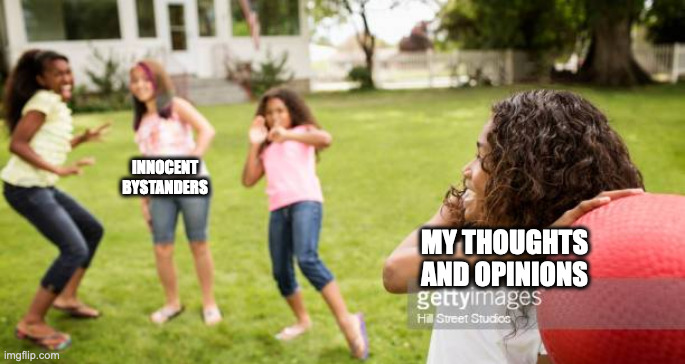
A young Black girl winding up to throw a red rubber ball at three other young girls standing on a lawn. The girl with the ball is labeled "My thoughts and opinions" while the three targeted girls are labeled "Innocent bystanders" 

So here's my five predictions about what TTRPGs will look like in 2025.

1. More Ambitious Physical Projects

With the release of Yazeba's Bed & Breakfast and Triangle Agency, we've seen TTRPGs really make the most of their physical medium as an art object in a way that goes beyond the art in the game. Both of these games have a tactility and physicality that sets them apart from others, whether it's the manipulation of the book itself through stickers and sealed cards in Yazeba's or the Normal Briefcase physical version of Triangle Agency. And both, significantly, have parts that are sectioned off from players at the start of a game, only to be revealed after certain conditions have been met.
 
Now these aspects aren't breaking new ground, per se (I'm assuming most of you are aware of Invisible Sun's Black Cube and the scroll games Fall of Magic and City of Winter, as well as the existence of the legacy boardgames that pioneered locking off parts of a game for later in the tabletop space), but both of them actually coming out in the same year after spending considerable time in development feels like they're forerunners of a new trend in the TTRPG field.

That said, I hope that the size of these games and the time it took to get them out in physical form gives excited designers some pause. Anything that gates play material away from players is, by necessity, pretty demanding. Demanding of time and attention to unlock those things, demanding of space in a rules book, and demanding of the money it takes to create and purchase those games. These games might be on the leading wave of a trend in games, but I don't think it would take too much for the space to get oversaturated with that kind of play. In fact, I wouldn't be surprised if this kind of game becomes the storygames version of the fantasy heartbreaker.

2. D&D's Fly-or-Flounder Moment

The more normal expression is "sink or swim," but I'm not kidding myself that D&D or Wizards of the Coast writ large is going away anytime soon. No, instead 2025 is going to be a moment of truth for D&D 2024 with the Monster Manual slated to release on February 18. Finally, all three core books for the not-a-new-edition of D&D will be out, and players and third party publishers alike will start to make the choice of what they're going to do about it. Will they convert to D&D 2024 entirely, buying expensive new physical and digital versions of core books that they kind of already own, or stick with original 5e and run the risk that everyone else will leave them behind?

I don't imagine it will ultimately matter that much to the number of people playing the game, but what could matter is whether the new semi-edition does enough for Wizards of the Coast and Hasbro's bottom line. We're already seeing Magic: The Gathering being milked for all it's worth with the injection of more Universes Beyond sets in 2025 and a potential Commander video game in the works, and D&D cannot be far behind. Hasbro revenue was overall down by 15% despite a 7% increase in WotC's revenue, and there seems to be an overall pivot to a digital strategy with the success of MtG's Arena and $30 million of revenue from Monopoly Go! alone.

All this is to say that D&D is in a precarious position: the development of D&D 2024 must pay off, WotC must continue to make even more money to make up for Hasbro's overall financial situation, and we have yet to see if players are particularly excited about the direction D&D is going. Again, the brand of D&D will continue to make money hand over fist compared to literally every other TTRPG out there, it's just a question of whether that's enough money to sate Hasbro's need for endless growth. If not, that will mark the beginning of a long and tortuous decline as the parent company finds new and innovative ways to make players cough up money to play a game that they like.

3. Backerkit Ascendancy

BackerKit has been giving Kickstarter a run for its money in 2024 and that is likely to continue in 2025. There's more detail in the site's yearly retrospective, but the most salient points are:
  • Huge campaigns across multiple markets (TTRPGs, board games, publishing, physical toys)
  • Explosive growth in new users (70% increase)
  • Great success from overtime feature (specifically The Between and Mothership Month)
  • Great success from collaborative funding (Goodman Games' Purple Planet collab and the aforementioned Mothership Month)
People, projects, and money are coming to BackerKit and they're innovating to make sure that they all have a reason to stick around. Much like D&D, I don't imagine that Kickstarter is going anywhere anytime soon, but if they're not careful they might find themselves getting left behind.

4. Polarization of Cozy/Intense Games

Someday I will probably write up something about my feelings surrounding the "cozy" genre of games, but suffice it to say for now that it's not really my cup of tea. And that's not to say that super intense games are my favorite thing ever, but I will always admire art that really swings for the fences on something difficult to explore and unpack. But my feelings on the matter don't matter as much as what I'm predicting here: an increase in the number of cozy and intense games due to political uncertainty in the USA and the personal vulnerability brought on by that.

What exactly do I mean by this? Basically that as the USA enters an even more (overtly) fascist period of its politics, people making games are going to react in one of two ways: 1) they'll make and seek out art that is comforting, safe, and escapist (cozy games); 2) they'll say "fuck it" and make and seek out art that is in-your-face, defiant of the increasingly upsetting norm, and challenging to both make and play. Even though my preference is clear from how I opened this section, I want to make clear that I don't consider this a moral choice. It makes complete sense to want to seek respite from a difficult and dangerous everyday life, and making/playing 'intense' games does not make one a better person.

That said, if this polarization does come to pass I anticipate considerable discourse on both sides about the validity of doing one over the other. If you find yourself wanting to contribute to that, here's my advice: find a local community organization to get involved in, be it mutual aid or a hobby group. It's going to do a lot more for you than arguing with strangers online, and you might even find new people to play games with.

5. Pregen Games Galore

Games like the aforementioned Yazeba's Bed & Breakfast and the now-mentioned Eat the Reich and Last Train to Bremen get a lot of mileage out of giving you some characters to play with and telling you to just go nuts with them. They don't include any rules for making your own characters, but for Yazeba's and Last Train it was clear to me when I played them that it wouldn't be all that difficult to figure out how to make some up if you wanted to switch things up (I can't speak for Eat the Reich since I have neither read nor played it), but also there's so much to explore with the provided characters that I don't know how much you would feel the need to make additional ones.

I predict that the success and popularity of these games will inspire people to experiment with making their own pregen characters for their games and overall looking at how to make tighter and more focused game experiences. This prediction is informed by Knight at the Opera's 3-part series on capsule games (published, appropriately enough, 1 year ago today) and inspired by the Dice Exploder Pregen Jam that happened in 2024, something that I didn't participate in but observed as part of the DE community. So on some level this prediction is actually coming a year too late, but I feel like there's momentum with this style of game and we'll see more of them in the coming year.

So that's it!

Those are my 2025 predictions! If I remember, I'll check in at the end of the year and see how right/wrong I was. Until then, keep playing games!

September 2026 TTRPG Crowdfunding Retrospective

This month I discovered that at some point around June, Kickstarter had added a new category to its searchable elements: TTRPG. Previously, ...